
Today, everybody knows that the exhaust fumes of internal combustion engines poison the air we breathe, endanger our health, and threaten the stability of our climate. But how much crude oil does humanity really use up every day, every hour, or every minute? How many gasoline engines are puttering away at any time around the globe? What amount of polluting exhaust fumes do we add to our atmosphere every day? This page tries to illustrate the extent of this environmental pollution, the scale of which might ultimately still be impossible to grasp.
How much crude oil has humanity burned up so far?
How much crude oil is still left on Earth?
out of all deposits discovered to date (3.3 trillion barrels)
How long will the remaining crude oil last us?
assuming steady consumption and no new deposits being discovered.
The calculation of the amount of crude oil remaining on the planet is based on positively confirmed reserves, which could be tapped right away and exploited in an economically feasible way. An additional 1.5 trillion barrels is estimated to exist, and with a somewhat higher effort could be exploited as well.
How much are we polluting in real-time?
Since the moment you opened this page, humanity has burned enough crude oil to fill up…
- 0 Olympic-size swimming pools (2.5 million litres)
- 0 Fuel tanker trucks (14,000 litres)
- 0 Oil drums (208 litres)
- 0 Soda cans (12 oz)
At the same time, the following has happened:
- 0 soccer fields of rainforest have been destroyed
- 0 trees have been cut down in rainforests
- 0 trees have been cut down in total
- 0 internal combustion engines have been manufactured
- 0 tons of plastics have been produced
- 0 tons of CO2 have been released into the atmosphere
Humans, gasoline, and exhaust fumes: environmental destruction on an inconceivable scale
Imagine, if you can: at any point in time, including this very second, over 100 million internal combustion engines are actively running on our planet. Hundreds of millions of pistons moving in their cylinders, making noise, igniting fuel, generating heat. It doesn't matter if they're being used for a purpose, ridden for fun at a race, or just uselessly idling because of somebody's laziness: each and every engine is relentlessly turning clean air into reeking, poisonous exhaust fumes. With every firing of every cylinder, every drop of gasoline burned, every little cloud sputtering from the exhaust pipe, a little more nature is defiled and irrevocably contaminated.
It all adds up. Millions of cars and motorcycles clogging city streets and highways. All the trucks keeping the global economy going. The machinery on every construction site in the world. 15,000 airplanes in the sky. All the boats on the lakes and ships crossing the sea.
Some relaxation on the weekend? All around, the string trimmers and leafblowers of the amateur gardeners are puttering away. Off to the campsite? Next to every other tent, a little gas-powered generator is rattling away. Off to a relaxing vacation at the beach, then? Only until the ocean breeze blankets the beachgoers in the stinking exhaust fumes blown in from the jetskis off shore. The ultimate getaway from the modern world, in the deepest rainforest? Off in the distance, you can already hear the howl of the chainsaws, cutting down the giant trees. There is no escape: wherever there is human life, petrol-burning engines are never far away. Their noise, fumes, and pollution are impossible to escape.
The amount of crude oil humanity consumes is almost impossible to grasp. The estimated rate of 104 million barrels a day means we're burning 50,000 gallons (190,000 litres) every second, 3 million gallons (11 million litres) every minute, 180 million gallons (680 million litres) every hour. That's 0.7 gallons (2.7 litres) per day for every living person aged 15 and over. Imagining a large, private swimming pool (10 by 5 meters) filled with crude oil (an assumed volume of 90,000 litres): humanity would empty it in less than half a second. Imagine how all of this oil has to first be extracted from the Earth. Imagine also what burning two large swimming pools of oil every second implies about the sheer amount of noxious, carcinogenic fumes we pump into our atmosphere and breathing air. Isn't it surprising that we still have any air left to breathe at all?
Although the rate of growth has slowed, the mind-boggling amount of crude oil we consume is still increasing. Despite grassroots environmental movements, and promises by industry and politics, it doesn't seem as if humanity will stop burning gasoline until the very last drop is used up – or at least until it's no longer economically feasible to extract more.
Do you want to learn more?
Hopefully, this page could help you better visualise the scale of global crude oil consumption and human-caused air pollution. Maybe, though, it only helped you realise that this ongoing environmental destruction is of a scale that is simply impossible to grasp. If you're curious about the topic, you'll find more information, theories, and discussions on all aspects, causes, and ramifications of man-made pollution, especially from internal combustion engines and exhaust fumes, on the other pages of Abgase.org .
A particular focus is on humanity's unwillingness to give up burning gasoline even for sport and leisure. Although we've known about the damaging effects of gasoline exhaust fumes on our health and our environment for many decades, we haven't adjusted our behaviour accordingly. Now as ever, millions of people are actively participating in motorsports, where fuel is being burned simply to drive laps on a circuit. A short amusement for some, with lasting environmental consequences for everyone. Children and teenagers are still anxious to get their own moped or scooter, with which they go on to pollute the planet their own future depends on. Still, people use gas-powered tools when tending their garden, poisoning nature with toxic exhaust fumes in return for a slight reduction in physical strain.
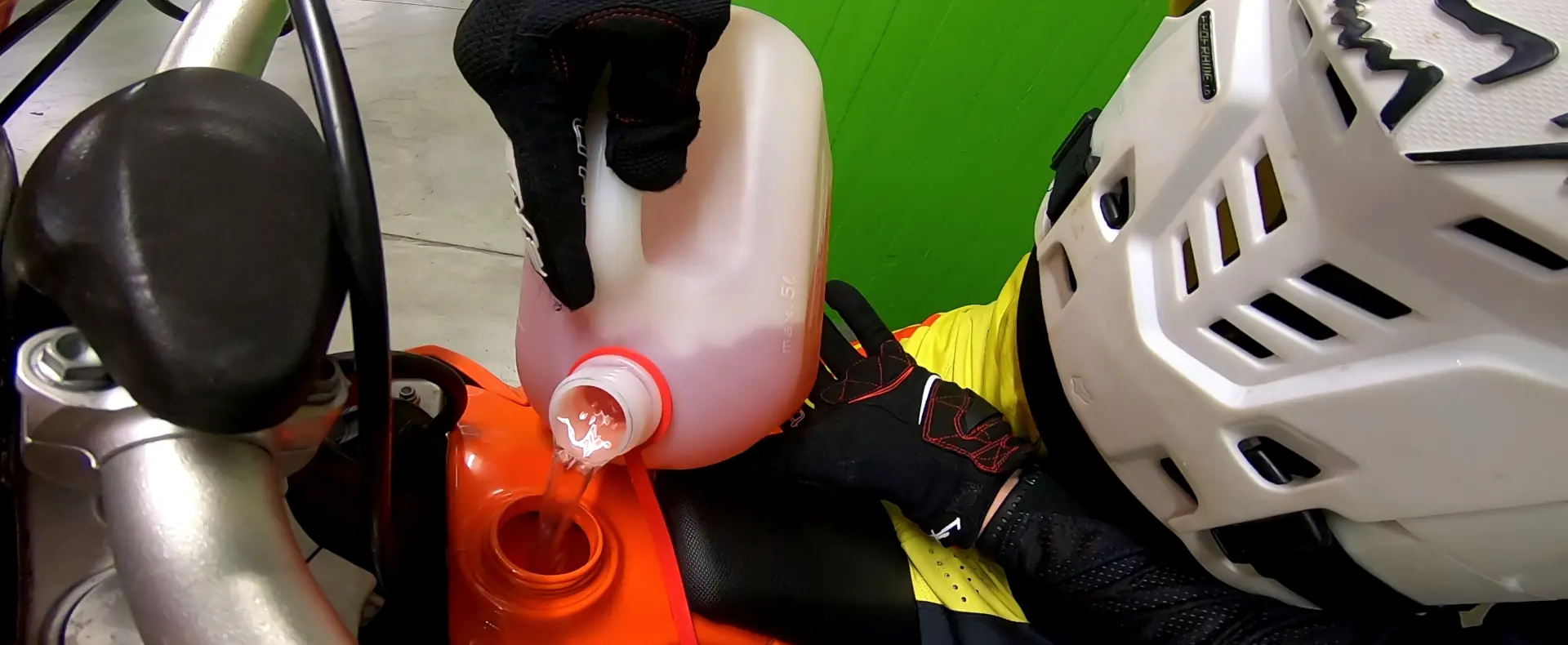
How could anyone explain the fact that we humans, despite the perilous state of our environment, aren't willing to give up even the most frivolous uses of petrol engines? How could we grow so estranged from nature that we, suited up in plasticky protective gear beyond all recognition, would contaminate our own basis of life for a little bit of fun and excitement? Do people who use combustion engines for sheer fun struggle with a guilty conscience, or do they manage to suppress any feelings of guilt? How are young people growing up in a society which, on one hand, has developed an increasing awareness for environmental issues but, on the other hand, keeps glorifying gasoline culture, motors, and motorsports?
Abgase.org tries to tackle these questions and more. If that has caught your interest, your best place to start would be the front page.
Comments